To maintain the more traditional or homespun look often associated with village or tribal rugs, vegetable dyes, such as saffron, indigo, madder root and even tree bark, must be prepared.
Once the only coloring method, it is both time-consuming and costly to locate and gather natural substances not always available in significant amounts.
A fine ground powder resplendent in color and texture is the desired result and must meet the exacting standards of the dyemaster.

After initial preparation, the rhythmic tapping of the hardwood mortar and pestle, accedes to the monotone grinding of the heavy stone wheel which completes the task.
Then, like tea or coffee, water is added and the mixture must be allowed to brew or steep.
To ensure a permanence in the color of the yarn, it is first dipped into a solution of alum or iron. The dye will now be able to permanently bond to the wool fibers.
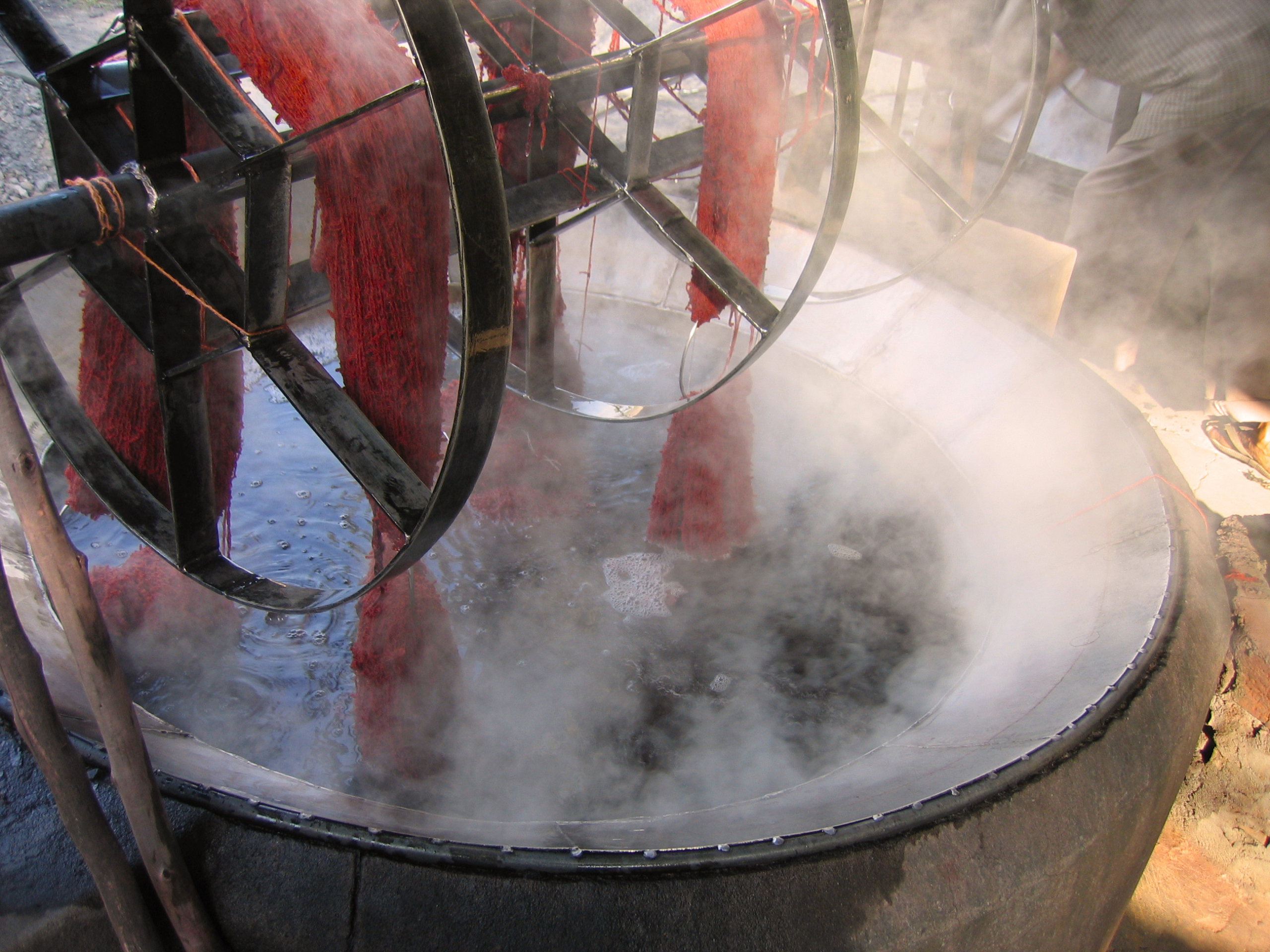
As soon as the appropriate color-mix is made ready, the bundles of wool are submerged into the vats of dye in accordance with pre-determined parameters of time and temperature.
Because some natural substances produce less permanence than others, it is sometimes necessary to repeat the procedure more than once to obtain a satisfactory shade.
Knowledge and correct handling produces wonderful results, but vegetable dye specialists are a rare breed in india today, and dye-masters must pass on vast quantities of accumulated knowledge to apprentices, if the art is to survive.
As an employee of one of the largest natural dye companies in Jaipur, dye-master Ramzan Ji has been perfecting his craft for more than 50 years.
Natural dye producers are restricted to small batch dyeing, because variables found in nature, and species of plant indigenous to certain regions, virtually guarantee that no two mixes yield the same results.
Once the source of the color has been used up, the bundles of wool, and ultimately the rugs, despite best efforts, will not look the same.
Color recipes are passed down from generation to generation. They have been altered, reworked and improved upon through experimentation, inspiration and trial and error. Nevertheless, individual batch results are both unpredictable and inconsistent.
Natural dyes, although initially very bright, soften with time, aging beautifully, without really changing or losing their lustre. Their vibrant color, resists running when wet and
Long –term exposure to sunlight does not cause significant fading.
Once again turning to mother nature, the successfully dyed bundles are left out in the sun to dry, where they are occasionally turned.
Our next post will feature the next step in the rug making process: Chrome Dyes.
Discover our film The Colors of India to learn more about rug making.